
Yahoo Mail, Guides
Buy Yahoo Mail Accounts – The Complete 2026 Guide
Jan
Yahoo Mail is no longer the dominant email provider it once was, but in 2026, it still plays a quiet and strategic role inside many digital marketing and automation systems. While Gmail and Outlook receive most of the attention, Yahoo accounts remain valuable for teams that understand how and when to use them correctly.
Buying Yahoo mail accounts is not about chasing trends. It is about diversification, footprint distribution, and operational resilience. This guide explains why Yahoo mail accounts still matter, how they are used today, the risks involved in buying them at scale, and how to source them responsibly for long-term use.
Why Buy Yahoo Mail Accounts Instead of Creating Them?
At first glance, creating Yahoo mail accounts manually appears simple. The signup flow is accessible, and anyone can register an address in minutes. This sense of simplicity breaks down the moment scale is introduced.
Manual Creation Does Not Scale Cleanly
Yahoo actively monitors how accounts are created. Signals such as IP reputation, signup velocity, device and browser fingerprints, and phone number reuse are evaluated in real time. Creating multiple accounts from the same or similar environments quickly leads to verification loops, limited functionality, or silent trust suppression.
Passing initial verification does not guarantee stability. Correlation builds invisibly.
Newly Created Accounts Are Fragile
Freshly created Yahoo accounts lack history, behavioral patterns, and trust indicators. Until those signals are established, the accounts operate under heightened scrutiny.
Small mistakes—logging in too frequently, making aggressive security changes, or connecting automation tools too early—can permanently disable accounts with no recovery path.
The Hidden Cost of Manual Creation
At scale, manual creation becomes operationally expensive. Proxies, phone numbers, labor time, CAPTCHA-solving services, and inevitable account losses accumulate rapidly.
Buying pre-created Yahoo mail accounts is not a shortcut. It is an optimization that reduces friction, controls risk, and stabilizes workflows for teams that require reliable email infrastructure at scale.
What Are Yahoo Mail Accounts Used For Today?
Yahoo mail accounts are rarely used as standalone tools. In modern digital operations, they function as supporting infrastructure inside larger systems. Their value lies not in dominance, but in distribution—helping teams reduce concentration risk and diversify identity footprints.
While Gmail and Outlook handle primary workflows, Yahoo mail accounts often play a complementary role that strengthens overall system stability.
Social Media and Platform Registrations
Yahoo emails are commonly used to create and verify accounts on social platforms, online forums, and niche services. Although Gmail dominates mainstream registrations, relying exclusively on one domain creates correlation risk at scale.
Yahoo mail accounts help distribute account creation footprints and reduce dependency on a single email provider. By spreading registrations across multiple domains, teams lower the chance that enforcement or trust issues cascade across all assets.
Using Yahoo mail accounts supports:
- Diversification of account creation patterns
- Isolation of identities across platforms
- Reduced linkage between large account batches
For teams operating at scale, this diversification adds resilience and flexibility to account creation strategies.
Email Marketing and Inbox Management
Yahoo mail accounts are not designed for high-volume email blasting, but they remain effective for inbox-based workflows where sending volume is controlled and interaction quality matters.
Common use cases include:
- Managing replies and conversations
- Handling customer or partner communication
- Supporting low-volume outreach or follow-ups
When warmed up properly and used naturally, Yahoo inboxes can maintain stable deliverability in controlled environments. Their familiarity as a consumer email provider also helps reduce suspicion in one-to-one communication scenarios.
Automation and Verification Workflows
Many modern tools and platforms depend on email accounts not for sending, but for receiving. Verification codes, password resets, security alerts, and system notifications are all delivered through email channels.
In these workflows, Yahoo mail accounts are frequently used as receiving endpoints. Reliability and consistent delivery matter far more than sending capability. Yahoo’s infrastructure performs well in this role, especially when accounts are handled carefully and not overloaded.
Affiliate and Growth Operations
Affiliate marketers and growth teams often operate across multiple platforms, offers, and identities. Yahoo mail accounts are used to compartmentalize these operations, creating clear separation between campaigns.
By assigning different email providers to different workflows, teams reduce cross-contamination risk. If one set of accounts encounters issues, the impact remains isolated rather than systemic.
In this context, Yahoo mail accounts act as operational buffers—quietly supporting scale while lowering overall exposure.
Yahoo vs Gmail vs Outlook Accounts: When Yahoo Makes Sense?
Yahoo mail accounts are not substitutes for Gmail or Outlook. Each email provider occupies a different strategic position inside modern account systems. Choosing between them is not about quality alone, but about risk distribution and operational balance.
Understanding when Yahoo makes sense requires looking beyond surface-level trust metrics.
Gmail: Maximum Trust, Maximum Scrutiny
Gmail offers the highest domain trust across platforms. Accounts created or verified with Gmail addresses often encounter the least friction during registration. This makes Gmail ideal for primary identities and high-value assets.
However, that same trust comes with aggressive enforcement. Google’s detection systems are highly sensitive to correlation, automation patterns, and abnormal scaling. At volume, Gmail quickly becomes a single point of failure.
Gmail excels when:
- Account quality must be maximized
- Volume is controlled
- Long-term stability is prioritized over scale
Outlook: Ecosystem Compatibility and Balance
Outlook and Hotmail accounts sit between Gmail and Yahoo. They benefit from Microsoft’s enterprise credibility while maintaining broader tolerance across many platforms.
Outlook accounts integrate seamlessly with Microsoft-based services, advertising platforms, and B2B environments. They are often used where compatibility and professional perception matter.
Outlook works best when:
- Operating inside Microsoft-centric ecosystems
- Managing advertising or B2B workflows
- Needing a balance between trust and flexibility
Yahoo: Diversification and Risk Isolation
Yahoo’s strength is not dominance—it is distribution. Yahoo mail accounts provide an alternative domain that reduces dependency on Gmail and Outlook.
When Gmail or Outlook accounts become saturated within a system, correlation risk rises. Yahoo accounts introduce separation. They help break uniform patterns that enforcement systems look for at scale.
Yahoo mail accounts make sense when:
- You need to reduce footprint concentration
- Existing Gmail or Outlook saturation increases risk
- Specific workflows or campaigns must remain isolated
In mixed-domain strategies, Yahoo accounts act as stabilizers. They absorb pressure, spread exposure, and reduce systemic failure. They are rarely the primary driver of growth—but they quietly protect it.
Fresh vs Aged Yahoo Mail Accounts — Which Should You Buy?
The choice between fresh and aged Yahoo mail accounts should never be driven by price alone. It should be dictated by how the account will be used, how long it needs to survive, and how much operational risk is acceptable.
Treating all Yahoo accounts as interchangeable is one of the most common strategic mistakes teams make when scaling.
Fresh Yahoo Mail Accounts: High Flexibility, High Fragility

Fresh Yahoo mail accounts are newly created and carry little to no historical trust. From a system perspective, they exist in a probationary state. Platforms and internal security systems evaluate their behavior aggressively during early usage.
This makes fresh accounts suitable only in environments where loss is expected and acceptable.
Typical use cases include:
- Testing workflows and tools
- Disposable registrations
- Short-term or experimental projects
- Non-critical automation steps
The primary advantage of fresh Yahoo accounts is cost. They are cheaper to acquire and easy to replace. However, this comes with a trade-off: extreme sensitivity.
Minor mistakes—such as rapid logins, early automation, or inconsistent environments—often result in fast limitations or bans. Fresh accounts do not forgive errors.
They should be treated as expendable resources, not long-term infrastructure.
Aged Yahoo Mail Accounts: Stability Through Time
Aged Yahoo mail accounts benefit from time-based trust signals. Even minimal aging changes how platforms interpret the account’s legitimacy. An account that has existed quietly over time is statistically less likely to be flagged as abusive.
This added trust makes aged accounts far more resilient under real-world conditions.
Aged Yahoo accounts are preferred for:
- Social media and platform registrations
- Automation systems that require ongoing access
- Long-term inbox usage and communication
- Workflows where downtime causes disruption
Although aged accounts require a higher upfront investment, they consistently outperform fresh accounts in terms of lifespan and reliability. Fewer bans mean fewer replacements, less operational friction, and more predictable scaling.
Strategic Perspective: Consumables vs Assets
The most effective teams frame Yahoo mail accounts strategically.
Fresh Yahoo accounts are consumables. They are designed to be used, tested, and discarded without emotional or operational attachment.
Aged Yahoo accounts are assets. They are meant to be protected, warmed up properly, and integrated into workflows that require continuity and stability.
Understanding this distinction allows teams to deploy the right account type for the right role—maximizing efficiency while minimizing risk.
How Many Yahoo Mail Accounts Can Be Used Safely?
There is no fixed or officially published limit on how many Yahoo mail accounts can be used safely. In practice, the number itself is irrelevant. What matters is whether Yahoo’s systems can correlate those accounts to the same operator or environment.
Yahoo does not primarily enforce based on volume. It enforces based on shared signals.
Correlation Is the Real Risk
Yahoo’s detection mechanisms look for patterns that indicate coordinated control. The most common correlation signals include:
- Reused or unstable IP addresses
- Shared browser fingerprints or device characteristics
- Identical or synchronized login behavior
- Repetitive activity timing across multiple accounts
When these signals overlap, even a small group of Yahoo accounts can be flagged. Conversely, when correlation is controlled, dozens—or more—can operate without triggering enforcement.
What “Safe at Scale” Actually Means?
Safe usage at scale is not about hiding volume. It is about normalizing behavior.
Each account, or logical cluster of accounts, should appear to operate independently and predictably. This requires both environmental separation and behavioral discipline.
Key requirements include:
- Clean, stable IPs with consistent geographic signals
- Isolated browser profiles or hardened fingerprint separation
- Predictable login schedules rather than simultaneous access
- Gradual activity increases that mirror human adoption patterns
Accounts that behave calmly and consistently blend into Yahoo’s baseline user population.
Why Bulk Purchases Alone Do Not Create Safety?
Buying Yahoo mail accounts in bulk does not automatically enable scale. Without proper handling, bulk purchasing simply concentrates risk.
When accounts are treated as independent resources—with disciplined environments and realistic usage—scale becomes manageable. Without those precautions, even a small deployment can collapse quickly.
Safety is not determined by how many Yahoo accounts you own, but by how convincingly each one appears to stand alone.
The Real Risks of Buying Yahoo Mail Accounts
Buying Yahoo mail accounts is not inherently unsafe, but it is not risk-free. Most problems do not come from the act of buying itself—they come from how the accounts are created and how they are handled afterward.
Poor Account Sourcing
The highest risk begins at creation.
Accounts generated using reused IP ranges, automated scripts, shared browser fingerprints, or compromised environments lack structural integrity. These accounts may appear functional at first, but they carry weak trust signals from day one. Under normal usage conditions, they often trigger security challenges, limited functionality, or silent bans.
Low-quality sourcing creates fragile assets, regardless of how carefully they are used later.
Improper Handling After Delivery
A significant percentage of account losses happen after purchase, not during creation.
Common operational mistakes include:
- Logging into many accounts at the same time
- Changing passwords, recovery emails, or security settings too aggressively
- Connecting automation tools immediately
- Sending outbound messages or triggering activity too early
These actions create unnatural behavior patterns that quickly expose correlation between accounts.
Cheap Provider Traps
Extremely low-priced Yahoo accounts are rarely bargains. They usually indicate shortcuts in infrastructure, reused creation environments, or mass automation.
Cheap accounts tend to fail in clusters, not individually. This creates hidden costs through replacements, downtime, and operational instability.
Managing Risk the Right Way
Risk is not eliminated by avoiding purchased accounts. It is controlled through quality sourcing, gradual warm-up, and disciplined usage.
Teams that treat Yahoo mail accounts as long-term infrastructure—rather than disposable tools—experience significantly lower failure rates and more predictable outcomes.
How to Warm Up Yahoo Mail Accounts Properly?
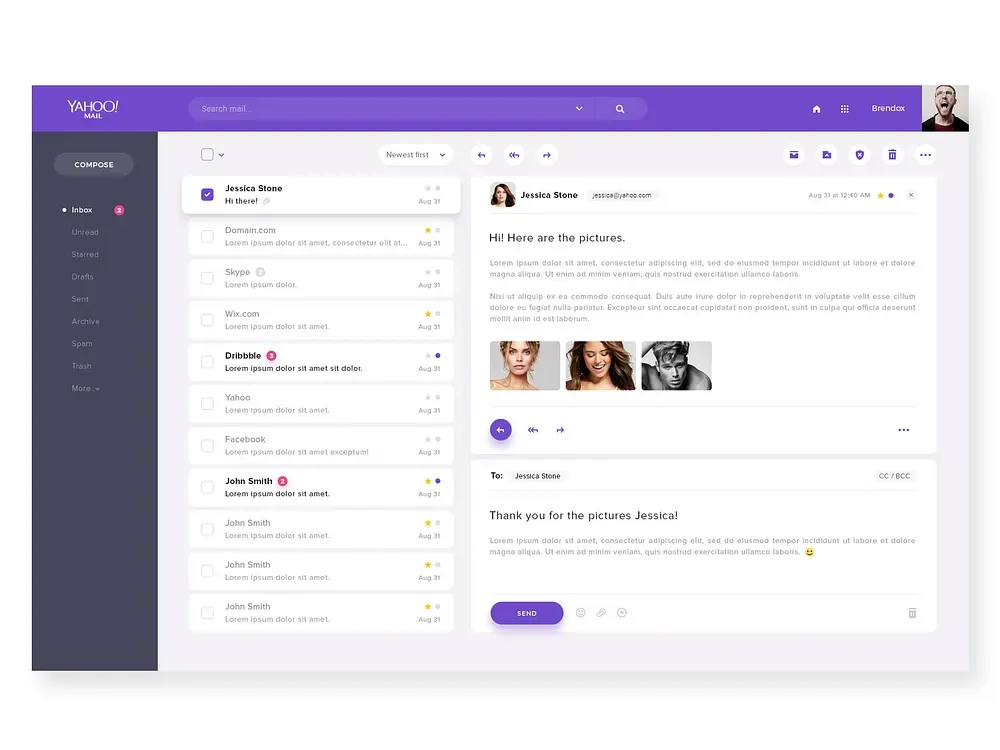
Warming up Yahoo mail accounts is not about technical tricks or bypass methods. It is about establishing believable, human-like behavior over time.
Yahoo expects new or recently activated accounts to behave cautiously. When activity escalates too quickly, trust collapses.
Start With Clean, Spaced Logins
Initial logins should never be rushed.
Each account should be accessed from a clean, stable environment, with logins spaced naturally over time. Avoid simultaneous access across multiple accounts, as this creates immediate correlation signals.
Focus on Passive, Natural Activity First
Early-stage behavior should resemble how real users interact with new inboxes.
Recommended early actions include:
- Reading incoming emails
- Reviewing inbox folders and basic interface elements
- Adjusting profile details and security settings
- Light inbox interaction without sending messages
This phase builds baseline trust without generating risk.
Introduce Outbound Activity Gradually
Outbound actions—such as sending emails or interacting externally—should begin slowly and only after the account has demonstrated stability.
Automation, integrations, or repetitive actions should be delayed until the account has a consistent usage history. Introducing these too early is one of the most common causes of Yahoo account loss.
Patience Preserves Accounts
Rushing the warm-up process is the fastest way to lose Yahoo mail accounts. A gradual, disciplined timeline preserves trust, extends lifespan, and makes each account usable for long-term operations.
What Determines the Price of Bulk Yahoo Mail Accounts?
The price of bulk Yahoo mail accounts is not arbitrary. It reflects effort, time, and risk management during creation and delivery.
Account Type and Age
Fresh Yahoo accounts are cheaper because they require less time and simpler infrastructure to produce. They have no history and minimal trust signals.
Aged Yahoo accounts cost more because time itself is a resource. Even light aging improves credibility, stability, and tolerance under real-world usage. Providers must maintain accounts over weeks or months before delivery, increasing operational cost.
Verified accounts raise pricing further due to additional requirements such as verification steps, infrastructure controls, and higher failure risk during creation.
Creation Infrastructure Quality
Pricing also reflects how accounts are made.
Clean IP ranges, isolated browser environments, and manual oversight significantly increase cost—but they also increase account lifespan. Cheaper accounts often rely on reused infrastructure or automation, which introduces correlation and instability.
Bulk Pricing Reality
Bulk discounts exist because scale reduces per-unit overhead. However, extremely low prices are not efficiency—they are warning signs.
When evaluating cost, consider:
- Expected account lifespan
- Stability under real usage
- Replacement and failure rates
- Provider support quality
The cheapest option is rarely the most economical in the long run. Reliable Yahoo accounts save money by reducing downtime, replacements, and operational friction.
How to Evaluate Yahoo Mail Account Providers Critically?
The Yahoo mail account market varies widely in quality. Superficially similar offers can produce drastically different outcomes once accounts are deployed.
Evaluating providers critically is essential for minimizing downstream risk.
Creation Infrastructure Matters
Reliable providers invest heavily in how accounts are created.
This includes:
- Clean, non-recycled IP environments
- Controlled browser and device setups
- Manual oversight to prevent pattern leakage
These elements increase cost, but they directly determine account stability and lifespan.
Transparency Is a Strong Signal
Serious providers are clear about what they sell.
Key evaluation criteria include:
- Clearly defined account types (fresh, aged, verified)
- Transparent delivery formats and access details
- Explicit replacement policies for dead-on-arrival accounts
Vague descriptions or unclear guarantees usually indicate cut corners.
Support and Communication
Support quality matters more than many buyers expect. Responsive communication can prevent losses, clarify usage constraints, and resolve issues before they escalate.
Providers that avoid technical questions, provide generic answers, or compete solely on price are high-risk choices.
Think Beyond the Purchase
Choosing a Yahoo mail account provider is not just a transaction. It is a sourcing decision that affects operational stability. Providers that prioritize infrastructure and transparency reduce long-term cost—even if their upfront pricing is higher.
Why Businesses Choose EnterSocial for Yahoo Mail Accounts?
EnterSocial provides Yahoo mail accounts built specifically for real-world marketing, automation, and operational use, not for short-term experimentation or disposable workflows. Account creation is handled within controlled environments, with an emphasis on stability, consistency, and long-term usability.
Built for Operational Stability
Rather than maximizing volume, EnterSocial focuses on minimizing risk. Yahoo accounts are created using clean infrastructure and predictable patterns that reduce correlation and improve survivability under normal usage conditions.
This approach results in accounts that integrate more smoothly into live systems and tolerate gradual scaling.
Flexible Account Options at Scale
By offering both fresh and aged Yahoo mail accounts in bulk, EnterSocial enables businesses to match account types to specific use cases—whether for testing, isolation, or long-term deployment.
Clear delivery formats, bulk availability, and transparent replacement policies remove uncertainty from the sourcing process.
A Strategic Sourcing Partner
For teams that depend on stable email infrastructure, sourcing Yahoo mail accounts is not a tactical purchase. It is a strategic decision. EnterSocial prioritizes predictability and control, helping businesses scale with confidence rather than react to preventable failures.
Frequently Asked Questions About Buying Yahoo Mail Accounts
Are Yahoo mail accounts still effective in 2026?
Yes. While not as dominant as Gmail, Yahoo mail remains effective for diversification, inbox workflows, and supporting automation systems where reducing domain concentration matters.
Can Yahoo accounts be used for social media registrations?
Yes. Yahoo emails are commonly used for registrations, especially within mixed-domain strategies that aim to reduce correlation risk.
Do bought Yahoo accounts get banned?
They can. Bans usually result from low-quality sourcing, shared environments, or aggressive usage—not from the act of purchasing itself.
Do Yahoo accounts need warm-up?
Yes. Proper warm-up significantly improves account stability, lifespan, and tolerance under real-world conditions.
Are aged Yahoo accounts safer than fresh ones?
Generally, yes. Aged Yahoo accounts carry stronger trust signals and are more forgiving when integrated into live workflows.
Conclusion
Yahoo mail accounts are not shortcuts or outdated tools. They are infrastructure components within diversified marketing and automation systems. When sourced responsibly and managed with discipline, buying Yahoo mail accounts reduces friction, saves time, and supports scalable operations.
The advantage comes from buying smarter—not more. Choosing the right account types, warming them properly, and using them within clean environments determines long-term stability. For teams that require predictable Yahoo mail assets at scale, sourcing through a professional provider like EnterSocial helps maintain control, consistency, and operational reliability.
